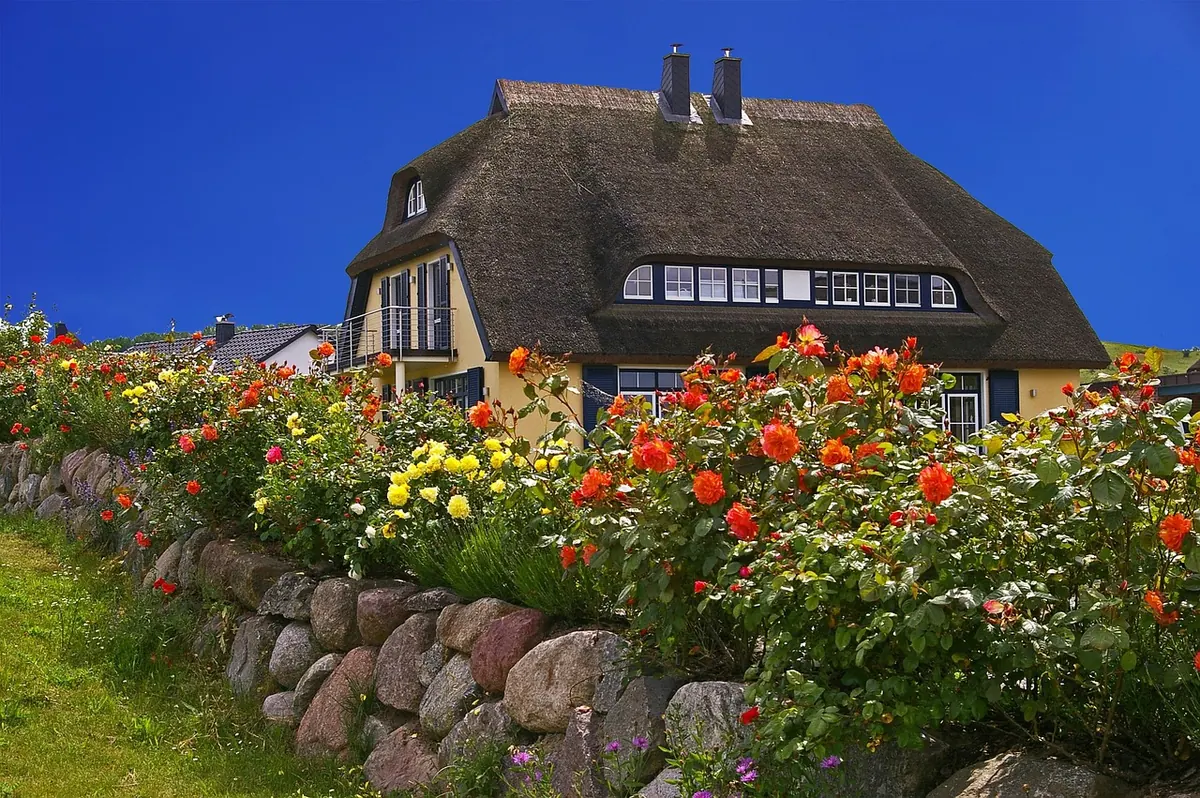
Island gardening is generous. Winters are milder, the growing season is longer, and the light in late spring can make even a tired border look good. It is also unforgiving in quite specific ways. A mistake that costs you a little growth inland can cost you the whole plant here, because wind, salt, thin soil and cool damp air all pull in the same direction at once.
The encouraging part is that these mistakes repeat themselves. They are predictable, and predictable problems can be planned around. What follows are the ones that come up most often on island plots, and the practical fixes that actually work.
Overwatering: the most common own goal
Coastal gardeners often assume the sea air means dry conditions. In open ground the opposite is frequently true. Cool, humid air reduces how much water plants lose through their leaves, and on shallow soil over rock, water collects in hollows with nowhere to go. Add a high water table on low-lying ground and you have roots sitting in cold, airless soil for weeks.
Containers are the exception, and they catch people out too. Wind strips moisture from pots far faster than still air does, so a planter by an exposed gate may need water daily while the border three metres away needs almost none. Treat pots and open ground as separate worlds.
Signs you are watering too much
- Lower leaves yellowing on plants that should be deep green
- Soft, dark stems at soil level, or a plant that lifts with a gentle tug
- Moss, liverwort or green algae on the surface of the compost
- Fungus gnats rising in a cloud when you touch the pot
- A plant that wilts every afternoon even though the compost is soaking
- Compost that smells sour rather than earthy
Fix it by checking before you water: push a finger in to the second knuckle, or lift the pot and feel the weight. Water deeply and less often rather than little and often, and water in the morning so surplus can drain before the cool of the evening. Take saucers out from under pots through winter, stand containers on feet so air reaches the drainage hole, and on badly drained ground plant into raised beds or low mounds rather than digging a hole that becomes a sump.
Wind protection that actually works
A single solid fence or wall is one of the worst things you can build on an exposed site. Solid barriers push wind up and over, then it drops down again in turbulence on the sheltered side, snapping stems and shredding leaves. A permeable barrier — a slatted fence, woven hazel, or windbreak netting with roughly half the surface open — slows and filters the wind instead. You get a calmer area stretching several times the height of the barrier downwind.
If you have room, plant a shelterbelt rather than installing one. Tough first-line shrubs such as escallonia, sea buckthorn, tamarisk, olearia and rugosa roses take the worst of it, with hardier subjects behind. In mild island gardens griselinia works well as a dense evergreen screen. At the very front, use cushion-forming plants that simply cannot be blown flat: thrift, sea campion, sedums and armeria.
Two details people miss. First, stake and tie newly planted trees and shrubs for their first two winters — it is the rocking, not the wind itself, that breaks the root plate. Second, water evergreens during dry spells in winter, when the ground is not frozen. Cold, drying wind takes moisture from their leaves while frozen ground stops them replacing it.
Planting at the wrong time
Mainland catalogues and seed packets are written for mainland conditions. Island seasons shift: soil warms more slowly in spring, gales can arrive in May, and wind chill matters far more than the number on the thermometer. Sow and plant to local signals instead. Feel the soil, watch what the established plants are doing, and be suspicious of any date that assumes a sheltered inland garden.
Tender crops such as courgettes, beans and tomatoes should not go out until night temperatures are reliably into double figures, and even then a mesh or fleece tunnel for the first fortnight pays for itself. For trees and shrubs, autumn planting suits free-draining ground, giving roots time to settle before spring wind. On heavy or waterlogged ground, spring is the safer gamble.
Buy smaller plants than you might be tempted to. A modest shrub establishes faster, needs less watering and usually overtakes a large specimen within a couple of seasons — a real advantage when the wind is working against you.
Ignoring salt exposure
Salt spray is the mistake people notice last, because damage often appears weeks after the gale that caused it. Look for scorching, bronzing or blackening on the windward side of a plant, blasted buds, and dieback that is noticeably worse on one side than the other.
Do not rush out with the secateurs after a salty storm. Wait a few weeks and give the plant a chance to push new growth from buds further back. Rinse the foliage of newly planted subjects and container plants with fresh water when you can, and rig a temporary screen of fleece or mesh for their first winter. Long term, though, washing is a sticking plaster. The real answer is a windward hedge and salt-tolerant planting. Keep the fussy, soft-leaved favourites behind shelter rather than at the seaward edge, where they will always be fighting a losing battle.
Assuming your soil behaves like the mainland's
Island soils are frequently thin, stony and quick to drain, sometimes alkaline with shell sand, sometimes peaty in pockets. They warm slowly and dry fast, and they compact badly under foot traffic. Rather than fighting this with deep digging, work with it: add compost as a mulch, build raised beds where drainage is poor, and keep off wet beds in winter.
Match plants to what you have. Mediterranean herbs, sea hollies and drought-tolerant perennials will thrive in lean, gritty ground that starves hungrier plants. Seaweed makes an excellent mulch and soil conditioner, but rinse fresh material first and keep it clear of stems.
A short checklist before you plant
- Check drainage by digging a hole, filling it with water and seeing how long it takes to disappear.
- Note the prevailing wind direction and decide where your shelter will go before anything else.
- Choose plants for the position you have, not the position you wish you had.
- Plant into shelter, not into the teeth of the wind, and stake young specimens.
- Water deeply and less often, and never water on a schedule alone.
- Order plants and seeds early — island deliveries take longer and gales delay everything.
None of this is complicated, but it does reward a bit of thought before you dig. Get the shelter right, keep an eye on the water, plant to island timing rather than a catalogue date, and choose plants that expect salt on the wind. Do that and the island's advantages — mild air, long light, a growing season that starts early and ends late — are yours to enjoy.